
SANDSM rising main relay: A two-phase programme focused on rehabilitation and replacement of failing foul water rising main
Published: 20 July 2026
Project overview
Anglian Water undertook a two‑phase programme to address repeated failures on the foul water rising main serving Sandon Pumping Station. Phase 1 focused on rehabilitating 1.1km of DN450 ductile iron main using Die Draw swage lining technology to install a fully structural 450mm PE100 SDR26 liner. Phase 2 replaced the remaining defective sections with a new 500mm PE100 SDR11 rising main delivered through a combination of trenchless and open‑cut techniques. The project required advanced hydraulic design, engineered temporary works, and innovative lining methods to deliver a resilient, future‑proof asset while maintaining operational continuity and environmental compliance.
Project details
Client: Anglian Water
Location: Sandon Pumping Station, Hammonds Road

The challenge
The rising main had suffered multiple failures, initially presenting as flooding in agricultural land before investigations revealed numerous blow holes along the first 1.1km downstream of the pumping station. The area included a brook with an Environment Agency sampling point, significantly elevating pollution risk. Land constraints were severe: active badger setts, high‑value agricultural contracts, and previous bursts on the opposite side of the A12. During Phase 1, further deterioration, including a depression and sinkhole above the A12 crossing, escalated the risk profile, with the potential for catastrophic failure beneath a strategic highway.
Our solution / approach
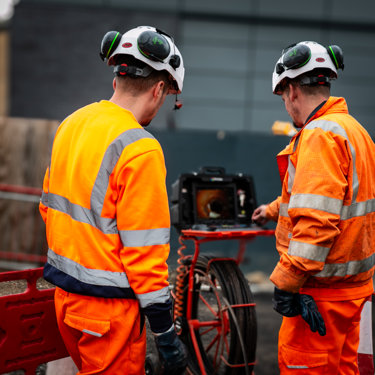
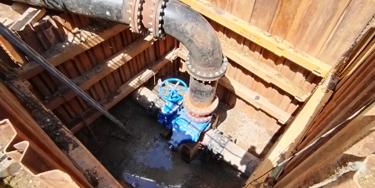
Phase 1 deployed a trenchless rehabilitation strategy using swage lining, enabled by CCTV condition assessment confirming the host pipe’s suitability. A temporary over‑pumping system was installed, including 1.1km of 500mm steel flanged pipework and trackway, allowing the rising main to be taken offline safely. Swage lining provided a close‑fit structural solution with minimal excavation and environmental impact. Phase 2 adopted a “design‑as‑you‑go” approach due to emerging risks, developing a new route that diverted the main away from the A12 using farmland, an existing underpass, and a combination of ATP cable ploughing, HDD, open‑cut, and a pressurised Feroforce liner for the final constrained section.
Execution detail that shows capability
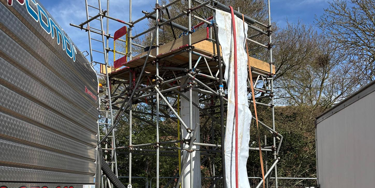
The project demanded complex engineering and rapid mobilisation. Phase 1 required bespoke winching design due to restricted access, using two 20‑tonne winches in tandem and custom‑fabricated frames to withstand forces up to 300kN. Two long pipe strings (567m and 500m) were welded to WIS 4‑32‑08 standards and installed in under three hours each. Phase 2 included a 275m HDD beneath the River Chelmer, engineered to avoid running sand and validated through geotechnical sampling. ATP cable ploughing installed 950m of pipe with minimal surface disruption, while open‑cut works navigated LV cable zones and the A12 underpass. All new sections were pressure‑tested in two 750m lengths before final tie‑in.
Outcome / impact
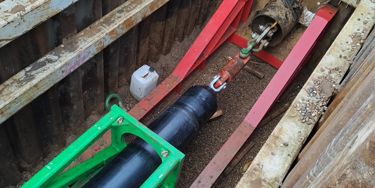
The project delivered a fully renewed, resilient rising main with significantly reduced risk of failure and improved hydraulic performance. Phase 1 installed 1.1km of new PE pipe using only three excavations, avoiding major environmental disruption and preventing costly compensation claims. Phase 2 eliminated the risk of a catastrophic burst beneath the A12, safeguarding public safety and operational continuity. Despite winter flooding and accelerated design timelines, the system was commissioned smoothly, demonstrating the IMR WR Alliance’s capability to deliver high‑risk, technically complex infrastructure under challenging conditions.
Here to keep your pipework structurally sound and serviceable
Our experts are available now to help you understand and improve the condition of your assets.
Contact us