

Eliminating infiltration through trenchless rehabilitation for Thames Water
Published: 5 November 2026
Project overview
Thames Water faced a persistent issue at Windmill Close involving multiple manholes suffering from structural impairment and infiltration.
The infiltration was placing significant strain on the sewerage network, increasing flows during heavy rainfall and contributing to localised flooding.
This excess flow also burdened the nearby pumping station and treatment works, driving unnecessary energy consumption and increasing operational costs. The challenge required a targeted intervention capable of eliminating infiltration, restoring structural integrity, and improving long-term network performance.
Thames Water needed a specialist trenchless solution that could be delivered efficiently across a varied set of manhole chambers.
Project details
Client: Thames Water

Client challenge
The primary challenge was the combination of infiltration and structural deterioration across several manholes, each contributing to excessive flows into the network.
This was causing operational disruption and increasing the risk of environmental non-compliance. The infiltration was directly linked to increased pumping and treatment activity, creating avoidable cost pressures. Thames Water required a solution that addressed both the structural defects and the infiltration sources, delivered safely within confined spaces, and capable of providing long-term resilience.
The works needed to be completed without disrupting local residents or wider network operations.
Solution and approach
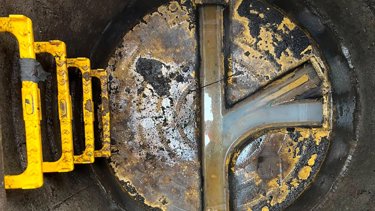
We deployed our experienced trenchless team to deliver a multi-stage repair strategy. Specialist expanding sealant foams were used to eliminate infiltration points, supported by high-pressure TSSR jetting to prepare manhole surfaces for structural repair.
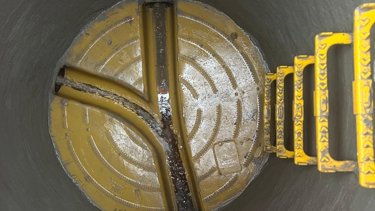
The team then carried out structural remedial works before deploying the automated Hermes manhole spraying system. Twelve manhole chambers ranging from 1m x 600mm to 3m x 1200mm were spray lined using Ergelit mortars to a uniform thickness of 10mm. This approach ensured consistent coverage, long-term durability, and a fully renovated internal surface across all chambers.
The works were delivered using a disciplined trenchless methodology designed to minimise disruption and maximise long-term performance.
High-pressure TSSR jetting ensured each chamber was properly prepared, allowing the sealant foams to bond effectively and eliminate infiltration. The automated Hermes spraying system provided precise, repeatable application of Ergelit mortars, ensuring each chamber received a consistent 10mm lining.
Structural repairs were completed methodically, with the team working across varying chamber sizes and conditions. The combined approach restored structural integrity, eliminated infiltration, and delivered a uniform, high-quality finish across all assets.
Outcome and impact
The completed works significantly reduced the risk of flooding and lowered the operational burden on the pumping station and treatment works.
By sealing infiltration and structurally renovating each chamber, Thames Water now benefits from a more stable, efficient and resilient network. The renovated chambers are guaranteed for 75 years, providing long-term assurance and asset protection.
This project demonstrates the effectiveness of trenchless rehabilitation in resolving infiltration issues and delivering durable, cost-efficient improvements to critical wastewater infrastructure.
Here to keep your pipework structurally sound and serviceable
Our experts are available now to help you understand and improve the condition of your assets.
Contact us